There is something unexpected about arriving in Sekinchan. The journey gradually moves away from the density of Kuala Lumpur. Roads become smaller, buildings become less dominant and the landscape begins to open. Water channels run alongside the roads, villages appear between stretches of agricultural land, and the paddy fields become the defining character of the journey.
Sekinchan is widely recognised for its paddy farming. The agricultural landscape is not simply scenery; it is closely connected to the identity and economy of the area. Tourism Selangor describes the paddy fields as one of the defining attractions of Sekinchan, with the agricultural landscape, irrigation channels and farming processes forming an important part of the visitor experience.
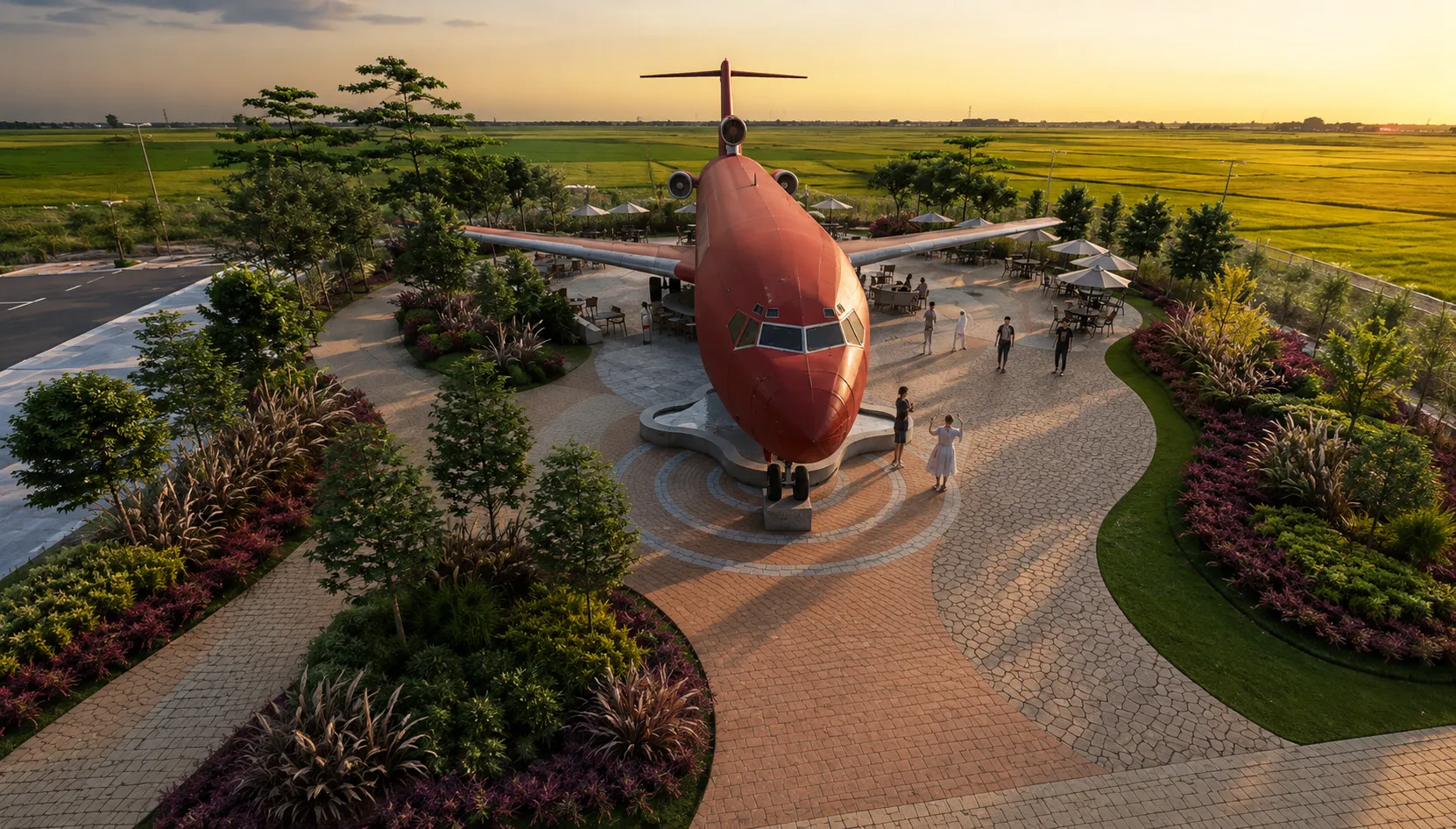
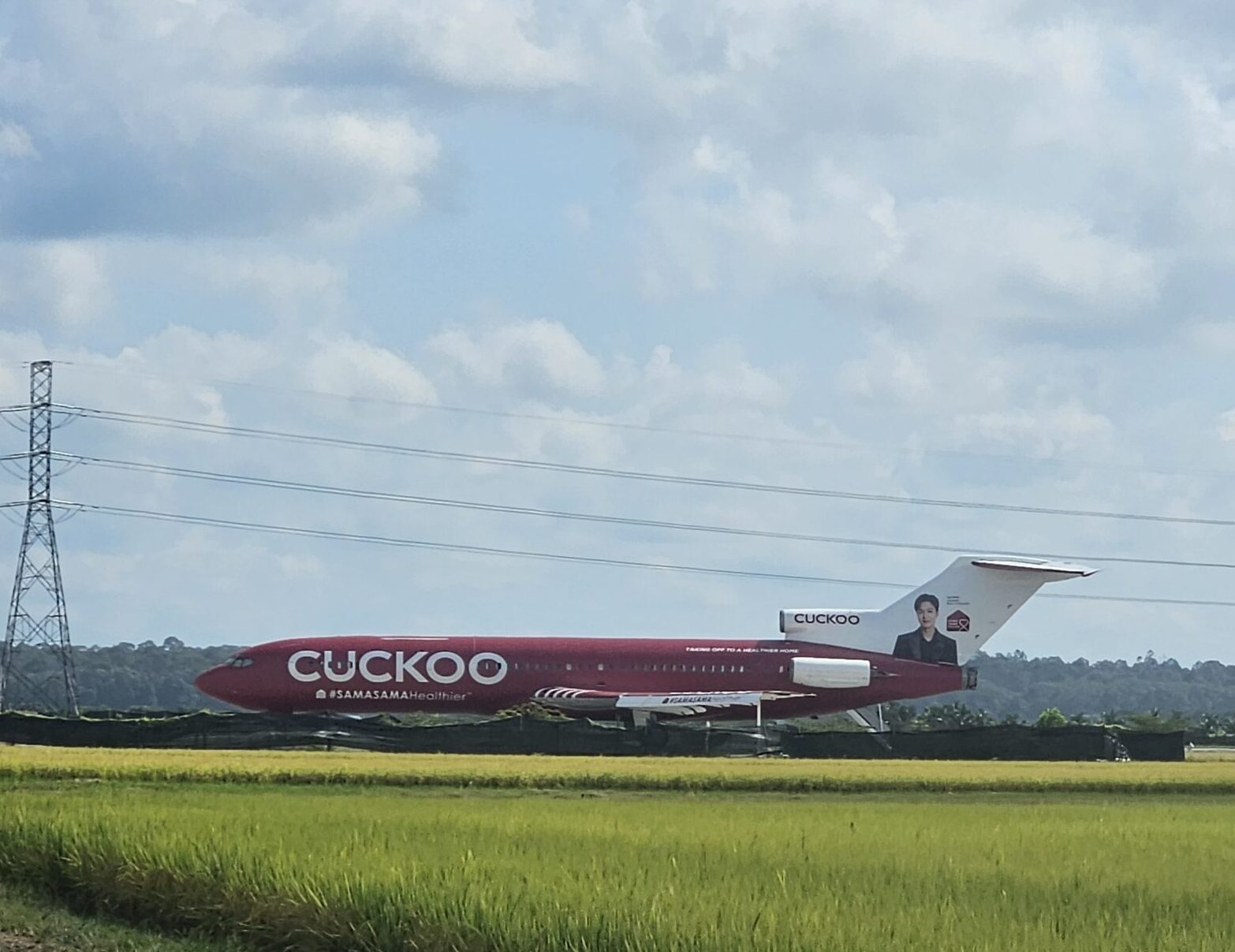
Then comes the unexpected. An aircraft stands among the fields.
The Terminal Sekinchan airplane, a Boeing 727, creates an immediate contrast against the green landscape and open sky. An object associated with airports, travel and movement suddenly becomes part of an agricultural environment.
The question is almost unavoidable: why is there an airplane in the middle of Sekinchan’s paddy field? That question is where the design story begins.
From Paddy Field to Destination
The value of Terminal Sekinchan does not come from the airplane alone. The aircraft is the signal that attracts attention, but the larger opportunity lies in what can happen around it.
A paddy field can be viewed as agricultural land, but it can also become a landscape for education, recreation, family activities, local culture and tourism. An airplane can be viewed as an industrial object, but it can also become a landmark, a gathering point, an interior environment and a memorable symbol of place.
The design approach can be understood as a progression: Paddy Field → Attraction → Experience → Destination → Tourism Ecosystem.
The paddy field establishes the identity of Sekinchan. The airplane creates curiosity. Architecture and landscape transform curiosity into experience. Activities, food, retail and events create reasons to remain within the destination. The resulting visitor activity creates opportunities for businesses and the surrounding community. This is where Sekinchan tourism can move beyond simply looking at the paddy fields — the landscape becomes something to experience.
A Different Way to Look at Sekinchan
The distance from Kuala Lumpur also contributes to the character of the destination. Sekinchan is close enough to become a practical short-trip destination from the Klang Valley, yet far enough for the landscape to feel different from the city. The journey itself becomes part of the transition — from urban density to rural openness, from buildings to fields, from traffic to a slower agricultural landscape.
This creates an opportunity for a different kind of family destination — a place where children can learn where rice comes from rather than simply seeing rice as a finished product in a supermarket, where families can spend time outdoors, explore the paddy landscape and discover local food and culture, while the agricultural identity of Sekinchan remains visible even as new forms of tourism and commercial activity are introduced.
The objective is therefore not to urbanise the paddy field. It is to create a destination that allows the paddy field to become more meaningful and more valuable.
The Airplane as Architecture
The Boeing 727 is the most recognisable element of Terminal Sekinchan, but its importance is not limited to its visual appearance. Within the design concept, the aircraft becomes an architectural object — almost a large-scale sculpture positioned within the landscape.
Its unusual location gives the project a strong identity from a distance. The open setting allows the aircraft to remain visually prominent, while the surrounding landscape provides the context that makes the object extraordinary. The airplane does not need to imitate the paddy field. The paddy field does not need to imitate architecture. Instead, the contrast between them becomes the character of the destination — a form of architecture that begins with curiosity rather than convention.
The Poetry of Nature
ZCube Designs describes the design direction as “The Poetry of Nature — a unique interpretation of architecture and nature.” The principle is simple: the natural landscape should remain part of the architecture rather than becoming something added after the buildings have been designed.
Around the aircraft, landscape elements are used to frame the structure and establish different views. Planting provides softness and shade while maintaining the visibility of the main landmark. Pathways create movement through the landscape, while water, stone and natural textures introduce additional sensory experiences. The tropical climate becomes part of the design consideration — shade, air movement, water and planting contribute to comfort, while open areas maintain the relationship with the sky and paddy fields. The aircraft therefore becomes more than an object to look at. It becomes part of a larger environment.
Designing Places People Want to Photograph
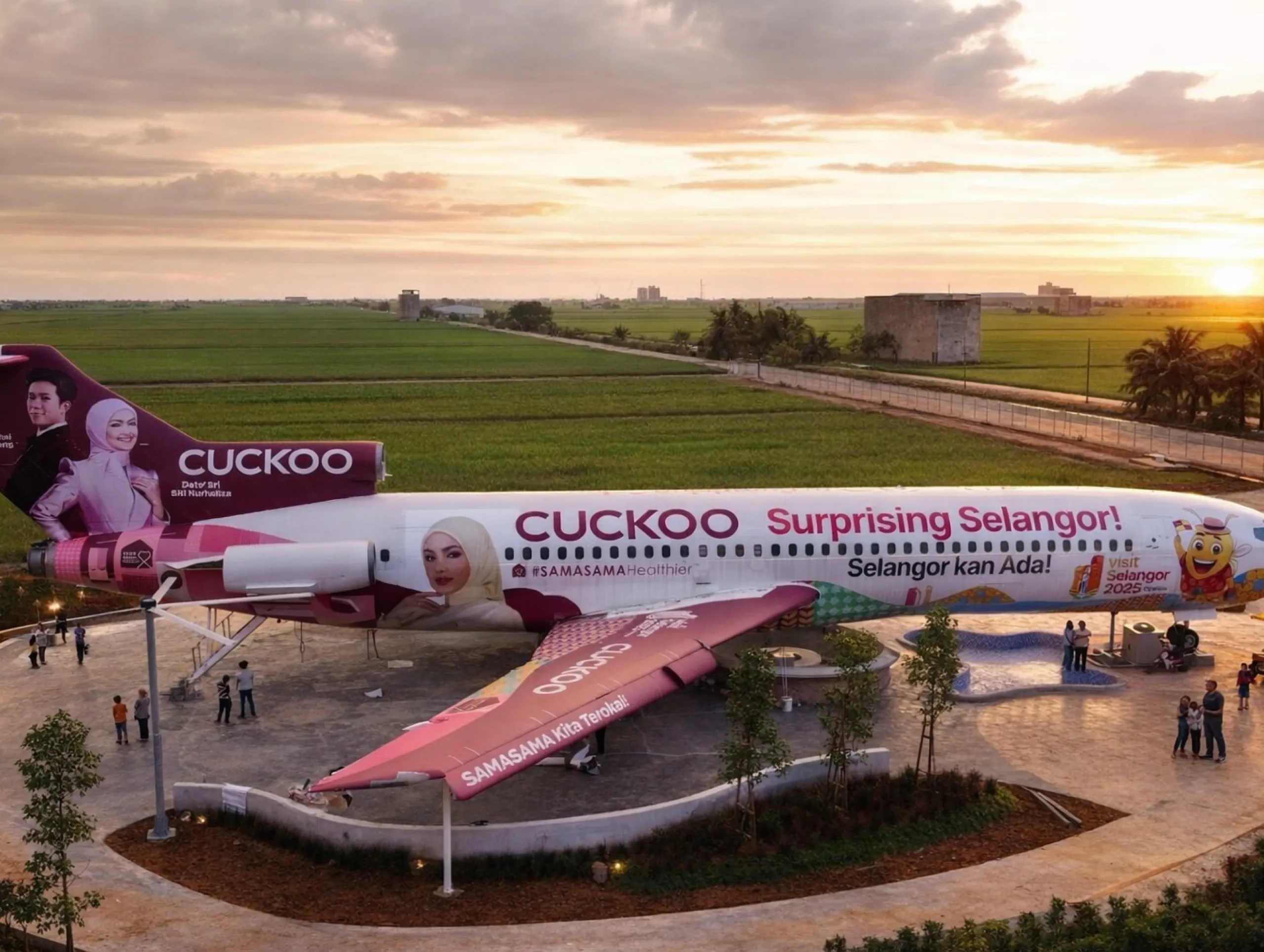
Terminal Sekinchan naturally creates strong photographic opportunities because the relationship between the airplane and the paddy field changes continuously. The aircraft remains a recognisable visual anchor, while everything around it changes — morning light creates one atmosphere, the afternoon sky creates another, and sunset changes the relationship between the aircraft and the landscape again.
The paddy fields themselves change throughout the agricultural cycle, moving from green fields to golden fields during harvest periods. Tourism Selangor notes that Sekinchan’s paddy is harvested twice a year, creating significant seasonal changes in the appearance of the landscape. As a result, the same architectural landmark can generate different visual experiences throughout the year — something particularly valuable for a contemporary tourism destination: organic content. Photography becomes part of the visitor experience rather than simply a marketing strategy.
What turns a landmark into a lasting destination isn’t the aircraft alone — it’s the master plan, the circulation, the commercial strategy and the design philosophy behind it. In Part 2 — The Design Philosophy Behind Terminal Sekinchan, we go behind the scenes into ZCube Designs’ four guiding principles — Co-Existence, Co-Glory, Co-Benefit and Co-Survival — and how master planning, commercial strategy and community thinking turned an unexpected object into a tourism ecosystem.
Best Time to Visit
Sekinchan’s paddy fields shift in colour across the agricultural cycle — from lush green to golden before harvest — so the same landmark can look markedly different depending on when you visit. Light also changes the experience through the day, with early morning and late afternoon generally offering softer, more atmospheric conditions for photography.
Getting There
Sekinchan sits within a manageable drive from the Klang Valley, making it a popular short-trip destination. As with most rural agricultural areas, road conditions and travel time can vary with traffic and weather, so it’s worth allowing extra time for the journey and checking current road conditions before setting off.
What to Expect On Site
As an outdoor, weather-exposed destination, the visitor experience at Terminal Sekinchan changes with the seasons and time of day — from open-air dining and landscape views to photography opportunities around the aircraft. Visiting during Sekinchan’s agro-tourism events or festival periods typically adds further activities on top of the core landmark experience.
Related links
Complimentary Digital Service
for New Retail & Restaurant Businesses:
- As an added value for new retail and restaurant ventures, we provide a complimentary digital service.
- This service may include creating social media marketing or website banners, to assist you on establish a strong online presence for your business launch.